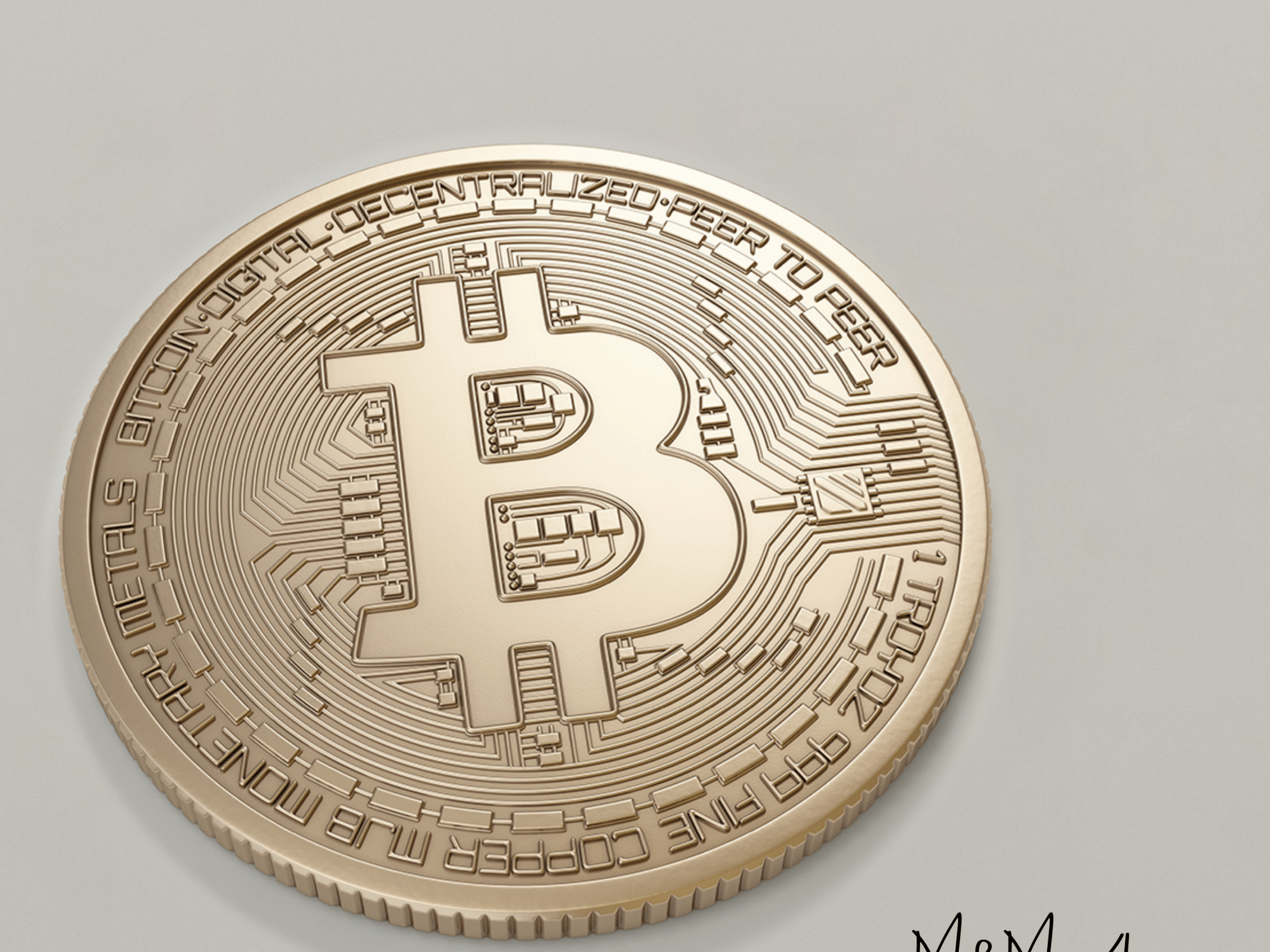
Let’s cut to the chase. Today, we’ll talk about what has been arguably the hottest word all the way from board rooms to family dinners, and that opening should tell you something about that word, ‘Crypto’. The last time this happened was probably during the dotcom bubble or more recently, Covid. Throughout this piece there are some words that are both italicised and in bold. In case you do not know the meaning upfront, looking it up would only reinforce the learning I aim share through this piece.
Satoshi Nakamoto. This is the pseudonym known to have authored the bitcoin white-paper, which is in essence, primitive literature of what a cryptocurrency (specifically bitcoin in this case) really is. This piece picks up important bits of the whitepaper and everything else that should make cryptocurrencies crystal clear to you.
Throughout the piece we’ll answer some questions through which I hope to impart my collated understanding, reading and experience with crypto and I hope we accomplish the aforementioned objective.
What’s a cryptocurrency?
Well, in the words of the whitepaper, cryptocurrency is a electronic coin defined as a ‘chain of digital signatures’. Think about it, if every holder of the coin signed off on the coin (hypothetically) and then the subsequent receiver also needed to sign it before spending/exchanging it, the coin becomes a credible proof of where exactly the coin came from, who held it along the way and how did it make its way to the ultimate receiver. This, in a very crude manner can be referred to as a blockchain (as you may have noticed, blocks are those who receive and transfer the coin further forming a chain that evidences the transactions in a series). Blockchain is the very basis for cryptocurrencies and let’s limit the discussion to bitcoin, because once we’ve got the basics in, the others are based on this very tech (with the exception that the currency is based on a public vs. private blockchain)
Why the name? and Why do we need crypto? (it may sound a little technical, but read it twice and you should be in command)
As mentioned earlier, cryptocurrencies are based on a cryptographic proof of work, a.k.a a hash, which is a random, often arbitrary set of inputs that converts into some meaningful output, and this conversion takes up resources. This is the work. Let me explain. Conventional digital transactions suffer with the ‘double spend problem’ wherein transactions are not 100% irreversible, which calls for a greater need of trust, between parties to the exchange and thus intermediaries. Cryptocurrencies aim to eliminate these intermediaries and solve the double spend problem by simply generating a computational proof of work based on a peer-to-peer distributed timestamp server. In plain English, the same chain of transactions we talked about is validated by a hash, because that is proof of the work that’s done, and that same chain of work becomes computational proof for that chronological order of transactions. In essence the blockchain network timestamps transactions (with the help of hash functions) by adding them to an ongoing chain of proof of work, which forms a record that cannot be changed without redoing the proof of work. This is the blockchain forming the basis for the cryptocurrency.
Is crypto an asset/commodity/currency? (what gives crypto it’s value?)
People often argue crypto is backed by nothing. I’d beg to differ. What crypto trades for is undisputedly a function of demand and supply, but that is not the sole determinant of value. In financial terms, value is interchangeably used with fair value, and fair value can be understood as the price at which two willing parties trade in a free market. In which case value can be a function of utility, demand & supply and in some sense, novelty. Crypto, in my opinion, is also backed by the network technology of the underlying blockchain. Assets are often valued in the financial world based on some future cash flow potential such as interest/dividend/royalty payments, none of which are an inherent financial feature of cryptocurrency, unless we venture into staking and yield farming, which is a topic for discussion on another day, but get this, that mere ownership doesn’t entitle you to income unlike bonds and equities.
Is it a currency? Over the years, money is most commonly and sometimes interchangeably used with currency. But what constitutes money? Well, at the bare minimum, three functions. One, as a medium of exchange. Two, as a store of value and three, as a unit of account. Does crypto perform all 3? Arguably, yes. Even if every bitcoin is hypothetically divided into fractions, colloquially known as SATs (or satoshi), it could perform the function of a medium of exchange and a unit of account. A store of value, I believe it conclusively is.
Is it a commodity? I believe this is a most reasonable characterization of crypto if we must assign some financial classification to it. One, because of the room for argument whether it solves all 3 functions of money and two, because it could mean different things to different people. Either ways it could be used in exchange such as a barter or as currency while occasionally also being used to park our additional savings.
Can I invest/trade/save crypto?
Yes. The adoption of cryptocurrency investing, has blown out of proportion, a good portion of it is because people just wanted to get on the bandwagon (most of the times with very little knowledge of crypto), some of it due to the fear of missing out (FOMO) as well as the potential of an astronomical return in a comparatively shorter time frame. Insofar as trading is concerned, some platforms offer crypto derivatives trading as well. Even better, The NYSE now has a listed bitcoin futures Exchange traded fund (ETF) that you can trade to partake in bitcoin’s memorable but unique story. I’d argue that although Coinbase’s share is listed on the NASDAQ as common stock, it is in some manner a crypto derivative itself, because Coinbase’s equity is indirectly backed by the strength of the crypto market and thus it’s business in this space.
As a wise man once said, there are only two things certain in life, death and taxes. Ironically, the latter is a cause for concern. How your crypto transaction is going to be taxed should be a primary determinant of whether the trade/investment is economically viable for you. While measuring financial performance and comparing alternatives, there are certain financial measures such as downside deviation (a.k.a Sortino ratio), that can be used to measure the downside of investing in an asset, standard deviation which is a measure of the volatility and as we’re well aware that number is comparatively higher for crypto than any other asset.
Crypto and blockchain have much more to it, and this dynamic world only keeps getting larger along with its real world applications. It definitely helps being well informed when you know exactly what you’re dealing with, investing in or exchanging for another along with the knowledge of how the value assigned to it, was derived, and whether you would agree with that number, because honestly that seems like a fair trade to me.
 Math&money By Kreshanu Koul.